Safe and Sound
Content note: explicit, consensual sex between adults (she’s 44, he’s 47). 18+ only.
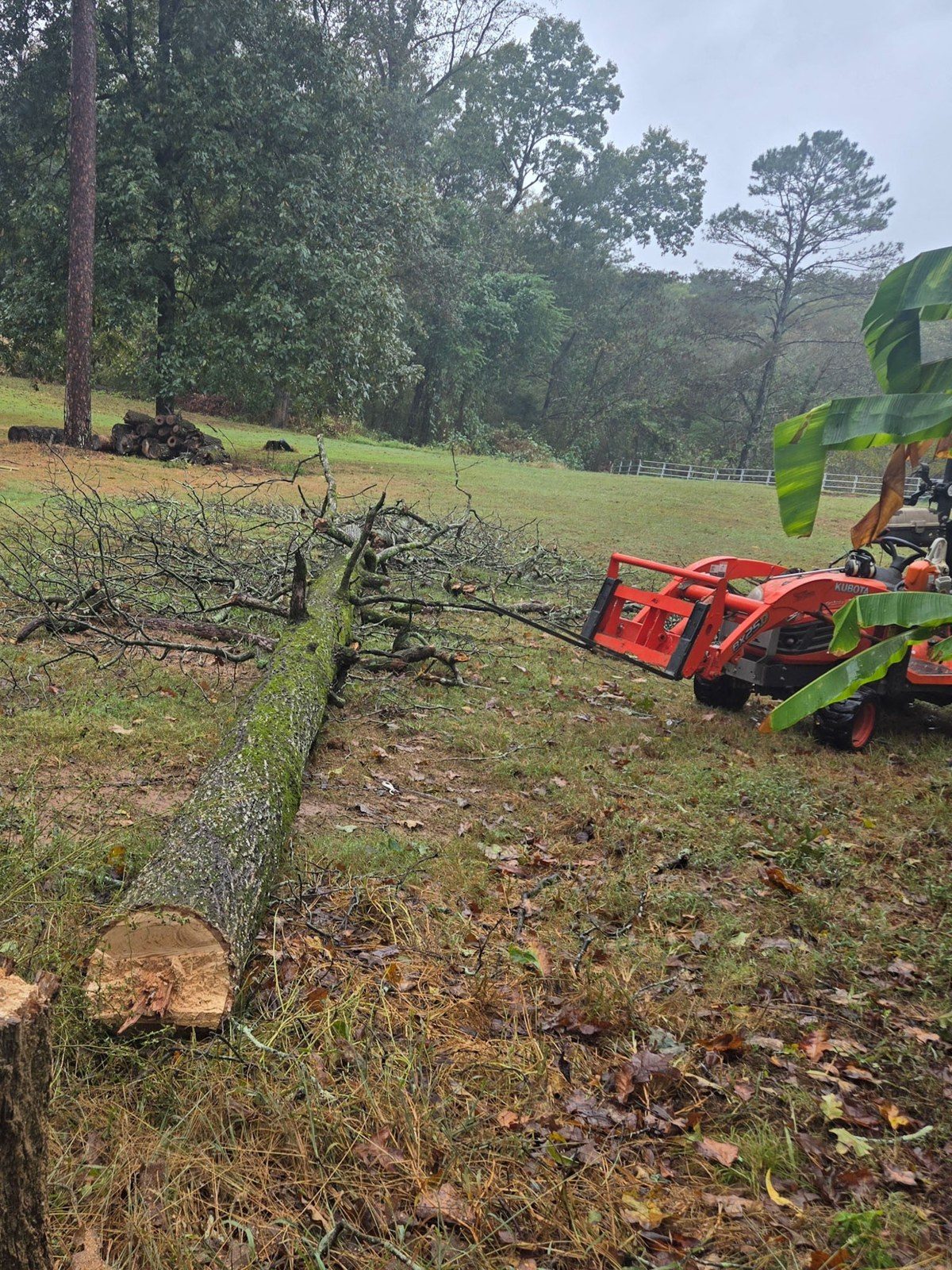
The water oak at the corner of Lorna’s yard had been dead since spring, and every night for a week she had lain awake listening to it think about falling.
It stood forty feet tall, gray and bare, its bark gone soft and green with moss. It leaned. Not much, just a few degrees, the way a man leans when he’s had one too many and is pretending he hasn’t. It leaned toward the back bedroom, where she slept, and toward the chicken coop, where her six hens slept, and the radio had been saying the same word since Tuesday: hurricane.
She called three tree services. Two never called back. The third laughed, kindly enough, and told her they were booked into November. “Everybody’s got a dead tree this week, ma’am.”
So on Thursday afternoon she called the number her neighbor had scribbled on the back of a feed-store receipt. A man answered on the second ring, and his voice was slow and low, like something poured.
“I’ll be there in the morning,” he said. “Don’t you stand under it.”
He came at seven, rolling up the gravel drive on an orange tractor with a front loader, a chainsaw and a coil of rope riding in the bucket like groceries. Lorna stood on the back steps in her robe with a mug in each hand, because she had been raised right.
He shut the engine off and climbed down. He was somewhere in his late forties, tall and unhurried, with sun-creased eyes and a short salt-and-pepper beard. His work shirt was faded to the color of a robin’s egg, sleeves already rolled.
“Wade,” he said, and took the coffee before he took her hand. “Thank you, darlin’. Let’s go meet this tree.”
He didn’t touch it at first. He walked all the way around it twice, slow, head tipped back, the way a doctor reads an x-ray. He looked at the house. He looked at the coop, where Henrietta was scolding him through the wire. He looked at the open stretch of grass between the banana plants and the white fence, and he nodded to himself like the tree had told him something.
“She wants to go toward your bedroom,” he said. “We’re going to talk her out of it.”
“Can you do that?”
He glanced over at her, and something warm moved behind his eyes. “Takes patience. You don’t rush a thing that’s already decided which way it wants to fall. You find out what it needs, and you give it a better idea.”
Lorna sipped her coffee and decided not to think too hard about why that made her knees feel strange.
It took him most of the morning. He climbed partway up on spikes and tied off his rope high in the trunk, then ran it out across the yard to the tractor and drew it snug. He cut a notch on the side facing the fence, careful and clean, a wedge of pale wood dropping into the grass. Then he walked over to where she stood on the porch and made her promise, out loud, to stay right there.
“I mean it, Lorna. Right here.”
“I promise.”
“Good girl,” he said, so easy and so quiet that she wasn’t sure he knew he’d said it. She knew. She felt it all the way down.
The saw snarled. He worked the back cut slowly, stopping every few inches to look up, to watch the crown, to feel the rope. The tractor took up the slack an inch at a time. And then the old oak sighed, a long creak like a door in an empty house, and it went exactly where he’d told it to go, down along the fence line with a whump that she felt through the soles of her feet. Moss and dead leaves drifted down after it like confetti.
The hens went quiet. The house stood untouched.
Lorna realized she was holding her breath, and let it go in a laugh that came out shakier than she meant. Wade pulled off his ear protection, wiped his forehead with his sleeve, and looked over at her across the yard.
“Told you,” he said. “She just needed a better idea.”
He spent the afternoon bucking the trunk into rounds and stacking them neat by the fence, the loader grunting back and forth. Lorna made sandwiches and a pitcher of sweet tea and found reasons to be outside. She was forty-four years old and had been divorced long enough to stop flinching at the word, and she knew perfectly well what she was doing. She just hadn’t done it in a long while.
By four the sky had gone the color of a bruise and the wind had started pushing at the pines. The radio said landfall around midnight. Wade killed the tractor’s engine, looked west, and frowned.
“Roads’ll be a mess going back to my place,” he said. “Trees down on 79 already, I heard.”
Lorna set the empty pitcher on the porch rail. Her heart was going faster than it had while the oak was coming down.
“You could stay,” she said. “Ride it out here. I’ve got a generator, a full freezer, and a guest room.” She paused. “And I’d sleep better with you in the house. That’s the truth.”
He looked at her for a long moment. He didn’t smile, exactly, but his whole face softened at the edges.
“Then I’ll stay,” he said. “Somebody ought to make sure the lady of the house sleeps safe and sound.”
The power went out at nine, the way she knew it would. Wade had the generator running before the fridge stopped humming, and then they sat at her kitchen table by candlelight, rain coming sideways against the windows, eating the gumbo she’d made because she always made gumbo when the weather turned. He ate two bowls and told her it was the best he’d had since his grandmother passed, and she believed him, because he did not seem like a man who said things he didn’t mean.
They talked. About his daughter, grown and teaching school in Mobile. About her ex-husband, who had never once noticed a dead tree. About the hens, each of whom Wade now knew by name. The wind howled and the old house groaned, and every time it did, he glanced at the ceiling and the windows, quietly listening, the way he’d listened to the oak.
“You do that a lot,” she said. “Listen to things.”
“Most things tell you what they need if you’re patient.” He turned his glass of wine slowly on the table. “Houses. Trees. People.”
“And what do I need?”
The candle flickered between them. He didn’t answer right away, and she loved him a little for that, for not reaching for the easy line.
“I think you’ve been holding up the whole place by yourself for a long time,” he said finally. “And I think you’re tired of lying awake listening for things to fall.”
Lorna’s throat went tight. She stood up, came around the table, and stood in front of his chair with her hands at her sides.
“I’d like you to kiss me, Wade,” she said. “I’ve been wanting you to since seven o’clock this morning.”
He looked up at her, and there was that warmth again, slow and certain. “You sure, darlin’?”
“I’m sure.”
He stood. He took her face in both of his big, rough hands like it was something that might bruise, and he kissed her slowly, the way he’d done everything all day, like he had every hour in the world and meant to use them. He tasted like red wine and the storm. Lorna curled her fingers into his shirt and held on.
He let her lead him down the hall. Her bedroom was the one the oak had been leaning toward all week, and when they stepped inside, she stopped and laughed softly.
“First night in a month I’m not scared of this room,” she said.
“Nothing’s coming through that wall tonight.” He shut the door behind them, and the storm got a little quieter. “Except maybe you.”
She lit the candle on the nightstand. In its gold light, he unbuttoned his shirt with no hurry at all, and she watched. He was broad and solid, with a scatter of silver in the hair on his chest and a pale line where his collar kept the sun off. She reached out and laid her palm flat against his heart. It was going as fast as hers.
“Tell me what you want,” he said. “And tell me if you want me to stop. Any time. I mean that.”
“I want you to take your time,” she said. “And I want you to not stop.”
He smiled, finally, all the way. “Yes, ma’am.”
He undressed her the way he’d taken down that tree: with a plan, and with patience, and with his full attention on every inch. Her robe. Her nightgown, lifted slowly over her head. He kissed her shoulders and the soft place beneath her ear, and when she shivered, he stopped and asked if she was cold, and she said no, Wade, it is not the cold, and he laughed low against her neck.
He laid her back on the quilt her mother had made. He kissed his way down her body like he was reading it, and every time she sighed he lingered, and every time she gasped he did it again. When his mouth finally settled between her thighs, she grabbed a fistful of the quilt and said his name to the ceiling. He was unhurried and thorough and entirely, devastatingly patient, and outside the hurricane threw itself at the house while inside Lorna came apart so hard her eyes went wet.
He rose up beside her and held her through the aftershocks, one hand stroking her hair.
“Still with me?” he murmured.
“Barely.” She turned in his arms and kissed him, tasting herself on him, and reached down between them. He was hard and heavy in her hand, and he let out a breath that sounded like it had been held all day. “I want you inside me. Now. Please.”
“You’re sure.”
“Wade. I’m sure. Nightstand drawer.”
He reached over, found the box she’d bought on a hopeful afternoon two years ago and never opened, and checked the date with a quiet chuckle before he tore one free. She watched him roll the condom on in the candlelight, and something about the care of it, the simple respect, undid her nearly as much as his mouth had.
He settled over her, braced on his forearms, and looked her in the eyes.
“Okay?” he asked.
“Okay,” she whispered.
He pressed into her slowly. So slowly. An inch, and a pause, and a kiss, and another inch, until he was all the way home and they both were trembling. Lorna wrapped her legs around his hips and held him there, and for a long moment neither of them moved at all. The wind screamed in the pines. The house held.
Then he began to move, deep and steady, a rhythm that had nothing to do with the storm and everything to do with her. He watched her face the whole time. When she arched, he went deeper. When she gasped his name, he slowed down until she begged, and then he gave her exactly what she begged for. She had forgotten it could be like this: not a performance, not a hurry, just a man paying attention.
She came again with her nails in his back and her face pressed against his neck, and he followed her over a moment later with a low, broken groan into her hair, holding her so tight she could feel his heart against her own.
Afterward he took care of the condom and came back to bed with a glass of water for her, because of course he did. He pulled the quilt up over them both and tucked her against his chest.
Outside, the hurricane was still going. Shutters banged somewhere down the road. Rain drummed the roof. A month ago, a week ago, last night, Lorna would have been lying stiff as a board, listening to every creak.
Instead she listened to his heartbeat slowing under her ear.
“Wade?”
“Mm.”
“Thank you. For the tree.”
He kissed the top of her head. “Thank you for the gumbo.”
She laughed, and then she yawned, and then, for the first time in a long time, she was simply asleep.
The morning came up washed and quiet, pale gold through the pines. There were branches all over the yard and one of the banana plants had folded in half, but the house stood, and the coop stood, and all six hens came strutting out complaining about the weather like nothing had happened.
Lorna found Wade out by the fence in yesterday’s jeans, coffee in hand, looking down at the long mossy trunk lying exactly where he’d put it.
“She’d have come right through your bedroom wall last night,” he said. “Wind like that.”
Lorna slid her arm around his waist and leaned into him. “But she didn’t.”
“No, ma’am. She didn’t.” He looked down at her, and there was that slow, warm light in his eyes. “Reckon there’s a lot of firewood to split here. Might take me a few weekends.”
“Might take you all winter,” Lorna said.
He smiled into his coffee. “I was hoping you’d say that.”
— Fix It Daddy